
Why Stories?
Because sometimes, a story can be a lifeline.
If you’ve ever found refuge, courage, or hope in a book, you know how a story can help you imagine a life beyond your immediate circumstances.
For children affected by trauma, this can be especially powerful. Stories offer a safe way to explore emotions, experience moments of calm, and imagine possibilities beyond the world they know.
And because the developing brain can adapt through new experiences—a remarkable ability called neuroplasticity—moments of imagination, safety, and connection can help support the healing process and open the door to new possibilities.
What Trauma Can Change
Childhood trauma can affect the developing brain, leaving children in a heightened state of stress that can interfere with learning, emotional regulation, relationships, and self-belief.
Without opportunities for healing, these effects can extend into adulthood, increasing the risks of poor health, substance misuse, and involvement with the criminal justice system. The consequences reach beyond the individual, affecting families, communities, and society.
But a child’s past need not determine their future. Through stories of courage, kindness, resilience, and hope, children can begin to imagine different possibilities—and discover that they, too, have choices in how their stories unfold.
What Stories Can Give a Child
1
A Safe Way to Explore Emotions
Sometimes it’s easier to understand fear, anger, or sadness through a fictional character than to speak about your own pain.
2
Seeing Through Another’s Eyes
When children step into a character’s world, they discover different perspectives, feelings, and motivations—building understanding of themselves and others.
3
A Chance to Explore Choices
Stories let children discover how characters face challenges, make decisions, and experience consequences—without having to take those risks themselves.
4
Making Sense of Their Experiences
Through a story’s beginning, middle, and end, children can begin to understand how events, feelings, and choices connect in their own lives.
Why Reading Together Matters
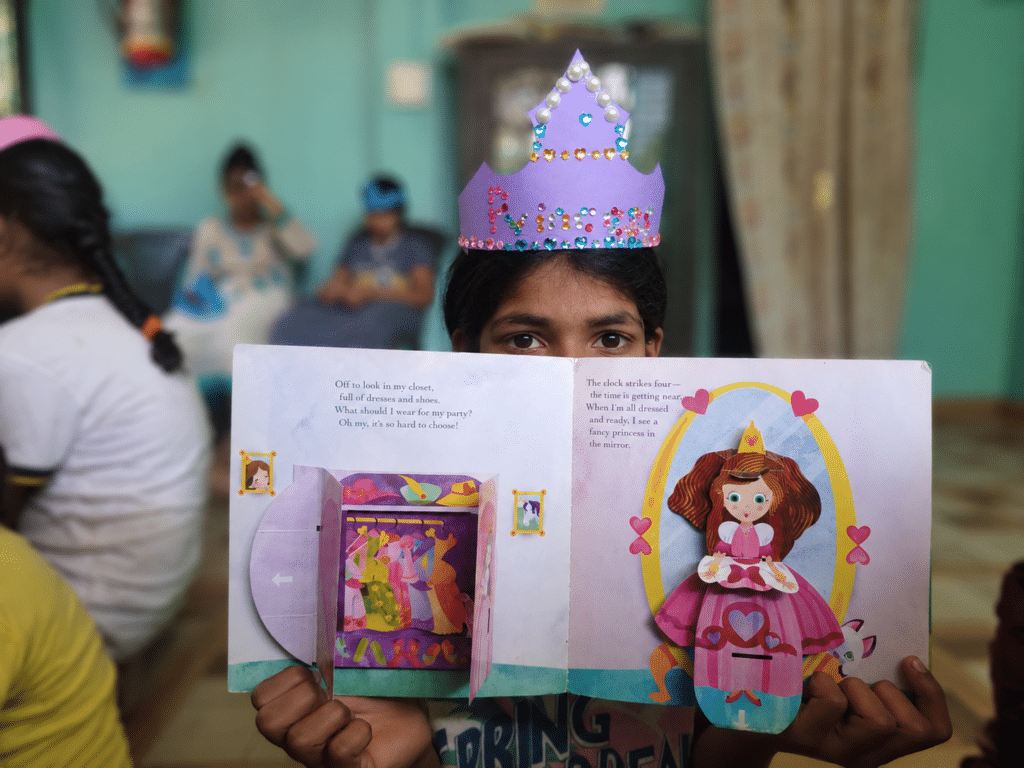
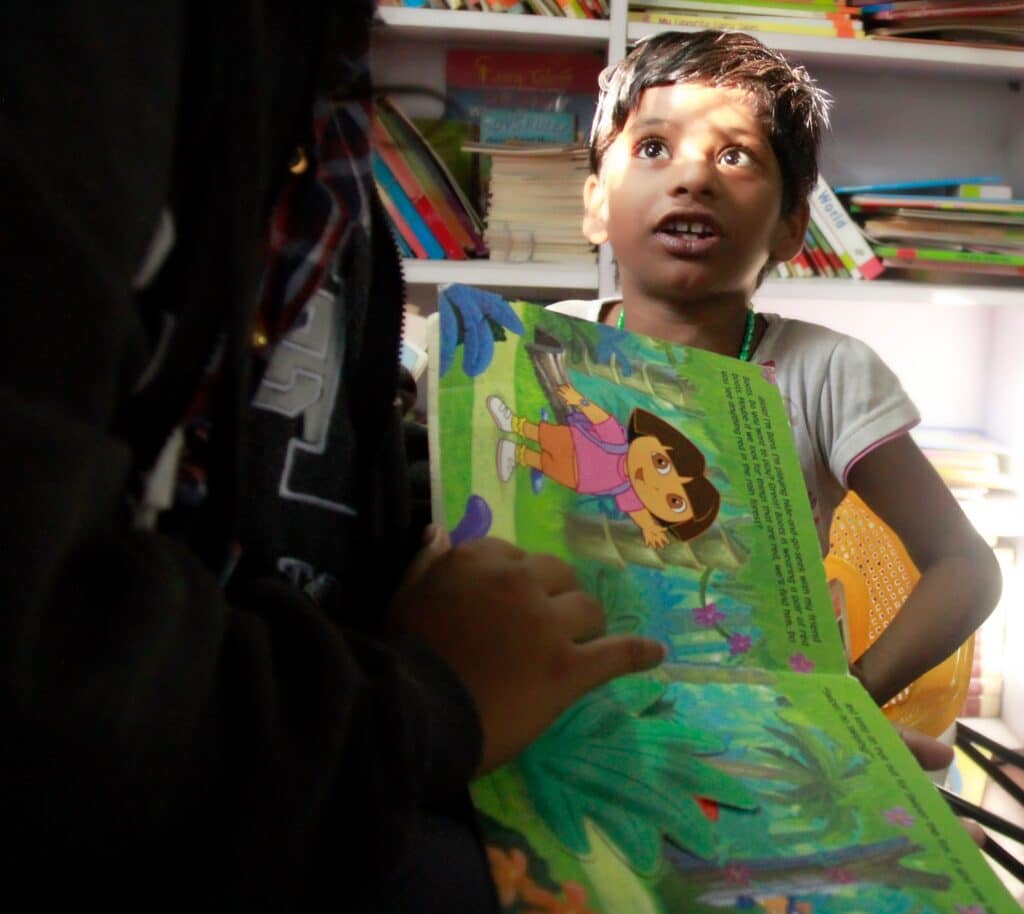
In many homes, sharing a bedtime story is a simple act of love. But for children growing up in orphanages or attending special schools, where caregivers often look after many children, that personal attention may be rare.
Bookwallah brings caring people from the wider community into their lives—not just to read, but to listen, laugh, encourage, and return.

Stories
Something to share
A story becomes a shared experience, creating opportunities for conversation, laughter, and personal connection.

Caring Adults
Someone who chooses to care
Our storytellers bring the warmth and attention of a caring older sibling or trusted mentor—people who choose to make time for these children.

Consistency
A promise kept
When familiar storytellers return week after week, children experience something powerful: care they can begin to count on.
A story opens a world of possibility. Someone who keeps returning reminds a child they matter in this one.
The Science of Stories
Research helps explain how storytelling, shared reading, and repeated positive experiences can support children’s development.

The Brain’s Ability to Change
Through neuroplasticity, the developing brain adapts to experience. Repeated opportunities for learning, imagination, and connection can support healthy development.

From Stress to Calm
Research suggests that storytelling can reduce stress and create moments of calm, helping children feel more comfortable and emotionally connected.

Engaging the Developing Brain
Listening to stories engages brain systems involved in language, memory, and imagination, encouraging children to make connections and explore new ideas.

The Power of Human Connection
Shared reading encourages conversation, language development, and responsive interactions with caring adults—all important experiences for healthy childhood development.
What the Research Says
Therapeutic Fairytales for Holistic Child Development: A Systematic Literature Review of Clinical, Educational, and Family-Based Practices
Andi Sulfana Masri – Journal of Mother and Child, 2025
Beyond clinical and educational contexts, family-based fairy tale interventions are vital in supporting children’s holistic development. Families can complement clinical practices and fairy tale-based learning by replicating practices such as shared reading at home and establishing reading routines. With active family involvement, fairy tale interventions in all contexts can profoundly impact holistic child development. Adopting approaches tailored to the child’s needs and environment, fairy tales can serve as a dynamic and relevant tool to support their comprehensive growth.
The impact of storytelling on building resilience in children: A systematic review
Chandra Ramamurthy – Journal of Psychiatric and Mental Health Nursing, 2023
Our review observed that storytelling interventions enhance wellbeing and psychological resilience in children. Storytelling not only decreased symptoms of anxiety and depression, but it also helped children recognize elements of mental health and increased their awareness of personal as well as community-based protective resources. While more research needs to be done to understand the influence of storytelling on specific components of resilience, this review has shown that storytelling indeed has an important role to play in building resilience in children.
Storytelling increases oxytocin and positive emotions and decreases cortisol and pain in hospitalized children
Guilherme Brockington – Proceedings of the National Academy of Sciences, 2021
This study provides evidence of the biomarker changes and beneficial effects of storytelling in children admitted to an intensive care unit. We found that, compared with an active control condition, one storytelling session with hospitalized children leads to an in-crease in oxytocin, a reduction in cortisol and pain, and positive emotional shifts during a free-association task. These important clinical implications affirm storytelling as a low-cost and humanized intervention that can improve the well-being of hospitalized children.
Bibliotherapy for adverse childhood experience: A systematic review
Luana Lenzi – Advances in Integrative Medicine, 2025
The findings suggest that bibliotherapy may help reduce ACE-related outcomes such as anxiety, grief, and PTSD, enhances emotional competence, provides a higher sense of support compared to waitlist. When utilized, it should be personalized, considering individual characteristics, attitudes, and the nature and severity of the issues being addressed. With further investigation, bibliotherapy could become a valuable complement to existing treatments, enhancing and sustaining positive mental health outcomes for those affected by ACE.
How Bookwallah Applies It

Beautiful Spaces
Creating the Conditions for Healing
Our Imagination Havens™ provide welcoming, thoughtfully designed environments where children can feel valued, settle into stories, and engage their curiosity.

Weekly Storytelling
Engaging Minds and Emotions
Stories and creative activities invite children to exercise imagination, explore emotions, develop language, and consider perspectives beyond their own.
Consistency
The Power of Repeated Experiences
Learning and development are shaped by experience. Returning storytellers create repeated opportunities for positive interaction, emotional connection, and new ways of thinking.

What We Measure
Looking for Meaningful Change
We assess children’s hope, self-perception, and happiness, alongside caregiver and qualitative feedback, to understand their experiences and improve our work.
Rishi’s story
Rishi arrived at an orphanage after suffering severe abuse at home. Angry and distrustful, she struggled to feel safe in the world around her.
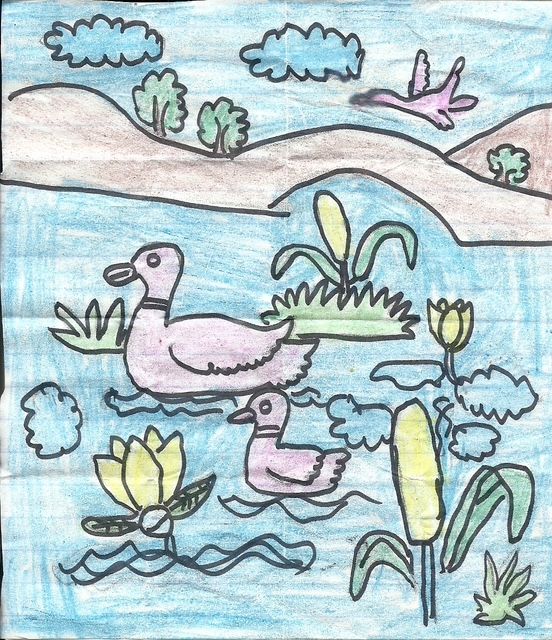
About six months after joining Bookwallah’s storytelling sessions, she drew three ducks: two swimming in a river and one flying above them.
When asked about her drawing, she said:
“Before, I was in the river. Now, sometimes I can fly.”
For Rishi, imagining a different possibility was a meaningful step in her healing journey.
Today, Rishi is grown, married, and building a life of her own.
Become Part of the Firefly Effect
Your generosity helps children discover their worth, imagine a beautiful future, and flourish—so that one day, they too may inspire others and pass the power of stories forward.
"(Required)" indicates required fields